
A clear offer. A defined delivery.
Your customer wants one thing to work, not a platform to adopt. Start with a single workflow, a delivery boundary everyone can name, and a demonstration of what passes and what fails.
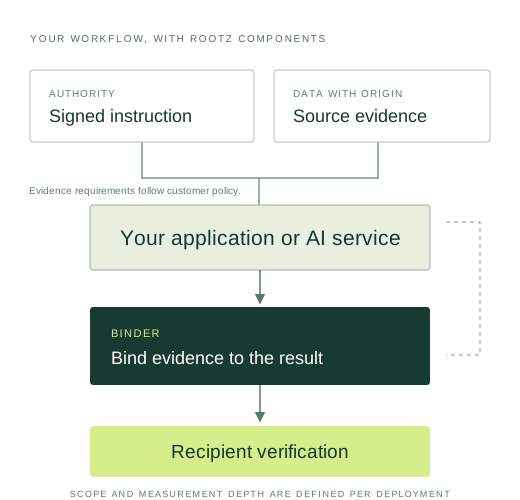
Sell the exchange the customer needs to rely on.
For an AI team, it may be a tool response before an agent acts. For a transport authority, it may be a renewal decision. For a municipality, it may be a signed assessment of a specific plan revision.
The first conversation should identify the receiving system, the action it will take and the evidence it needs. That makes the project scope and the business value concrete.
A delivery model with named owners
| Responsibility | Role in the delivery |
|---|---|
| Customer or public authority | Owns the service rules, authorization policy, records and decisions. Defines who may act and what evidence is sufficient. |
| Rootz | Provides the message-security components, Binder integration, verification tooling and evidence specifications for the agreed workflow. |
| Data-center operator | Runs the agreed hosting and key infrastructure, supplies available measurements, and owns operational support within its contract. |
| Microlink and delivery partners | Bring infrastructure and application integration into the customer program. Project scope names the implementation and support responsibilities. |
| Application provider | Supplies the licensing, permitting, registry or AI business application and its interfaces. |
Qualify an opportunity in the first meeting
Which exchange matters?
Name the request, producing service, consuming system and consequential next action.
Who owns the authority?
Identify the customer sponsor, service owner and policy decision-maker.
What already exists?
Inventory the application interfaces, source systems, identity services and hosting environment.
What evidence is missing?
Separate content integrity, authority, source quality, measurement and current status.
How will success be accepted?
Agree valid and invalid cases, operating targets, support ownership and a route to production.
The first engagement
Working session
Map the transaction, stakeholders, current interfaces and required evidence.
Solution definition
Produce the message profile, measured scope, responsibilities and a priced delivery scope.
Integration
Connect the producer, Binder and recipient verifier in the selected environment.
Acceptance and handover
Demonstrate the agreed checks, document exceptions and recovery, and train the operating team.
A proposal with concrete deliverables.
Include the workflow map, component bill of materials, evidence profile, integration interfaces, acceptance plan, operating runbook and commercial responsibilities.
License terms, hosting, support levels and rollout schedule are project-specific. The public partnership establishes the relationship; the statement of work establishes delivery commitments.
Use the customer briefingBring a customer workflow to the table.
Rootz and the delivery team can scope the first integration with the accountable service owner.
Arrange a partner working session